
90-Degree Days Are Already Here: Check Your Plumbing Before Summer Fully Sets In
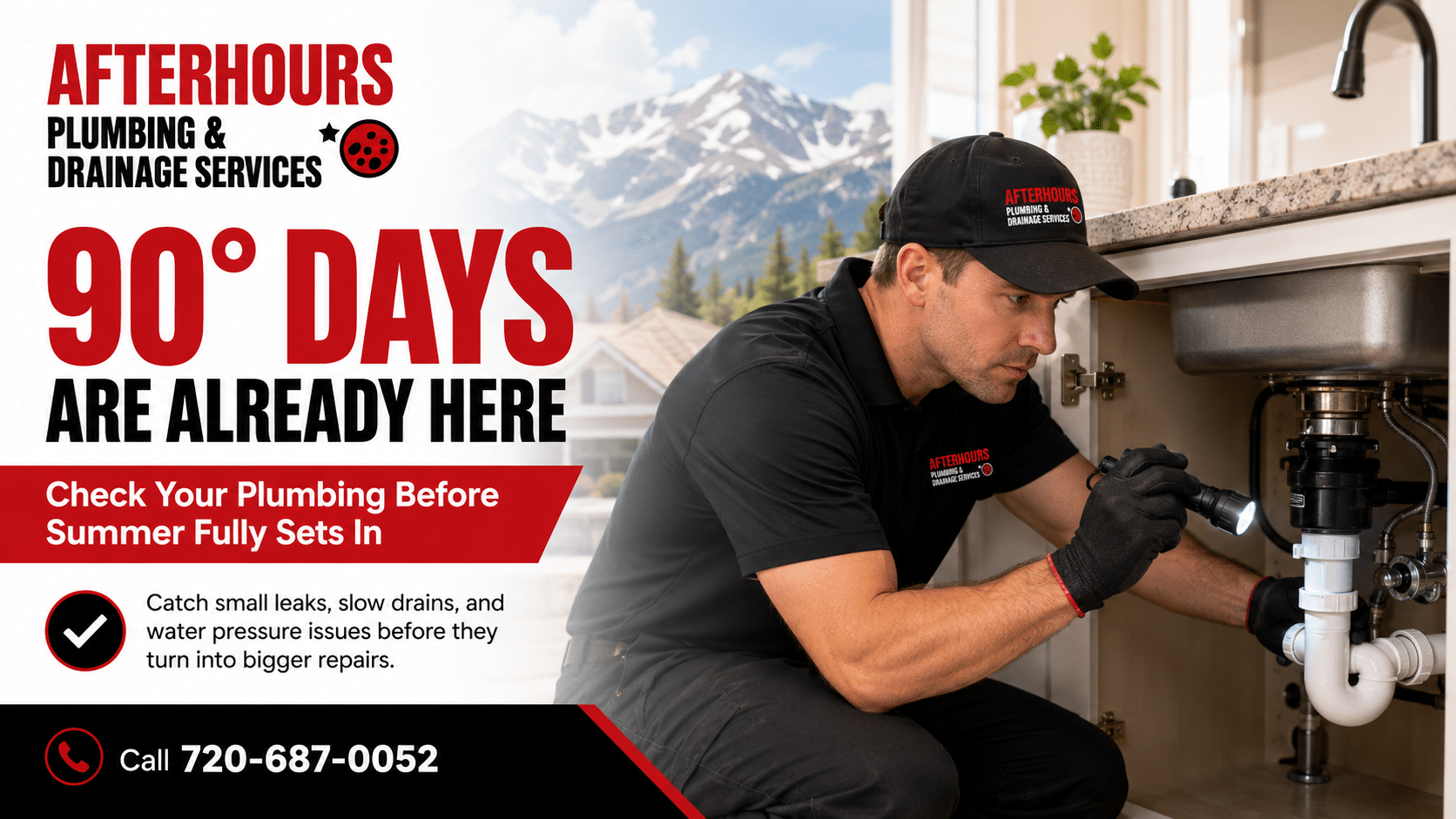
Get your plumbing ready before the heat hits. Schedule a checkup to prevent costly summer repairs.
Colorado has already had a few 90-degree days, which usually means one thing: summer is not waiting around.
Before the season fully settles in, it is a smart time for homeowners to take a closer look at their plumbing. Hot weather, heavier water use, sprinklers, outdoor hoses, guests, laundry, and everyday wear can all put extra pressure on your plumbing system.
The good news is that a lot of bigger plumbing problems start as smaller warning signs. Catching those issues early can help prevent leaks, water damage, slow drains, and expensive repairs later in the summer.
Here are a few plumbing areas worth checking before summer gets busy.
1. Outdoor Spigots and Hose Bibs
Once the weather heats up, outdoor spigots and hose bibs start getting used more often. Whether you are watering the lawn, filling a kiddie pool, washing the car, or connecting a sprinkler, that outdoor connection matters.
Check around your hose bib for dripping, leaking, loose fittings, or water coming from behind the wall. A small leak outside may not seem urgent, but it can waste water and may point to a bigger issue inside the wall or water line.
If your outdoor spigot is leaking, cracked, hard to turn, or not shutting off properly, it may be time to schedule outdoor spigot replacement in Denver.
2. Visible Leaks Under Sinks and Fixtures
The easiest plumbing issues to ignore are usually the ones hiding under a sink.
Before summer gets fully underway, open the cabinets under your kitchen sink, bathroom sinks, laundry room sink, and utility sink. Look for moisture, staining, corrosion, dripping, soft cabinet bottoms, or musty odors.
Even a small drip can cause damage over time. If you catch it early, the repair is usually much easier than waiting until the cabinet is warped, the floor is damaged, or the leak turns into an emergency.
3. Slow Drains Before Guests and Summer Use
Summer often means more people in the house, more cooking, more showers, more laundry, and more use on the plumbing system.
If you already have a slow drain, it is better to deal with it before it becomes a full clog. Watch for sinks, tubs, showers, or floor drains that are draining more slowly than normal.
Common signs of a drain issue include:
- Water is pooling around the drain
- Gurgling sounds
- Bad odors coming from the drain
- Water is backing up into another fixture
- Drains that slow down after repeated use
A slow drain is not something to panic over, but it is something to pay attention to. Plumbing problems rarely fix themselves. They usually just get more creative at ruining your day.
4. Water Pressure Changes
If your water pressure seems lower than normal, higher than normal, or inconsistent, it is worth having it checked.
Low water pressure may be caused by buildup, fixture issues, valve problems, leaks, or water line concerns. High water pressure can also be a problem because it puts extra stress on pipes, fixtures, water heaters, and supply lines.
If you notice pressure changes throughout the house, it may be connected to a larger water line or plumbing system issue. After Hours Plumbing & Drainage Services can help with water line repair and maintenance in Denver for homes dealing with water line concerns, leaks, or pressure problems.
5. Shut-Off Valves Under Sinks and Toilets
Most homeowners do not think about shut-off valves until they urgently need one.
Before summer gets busy, check the shut-off valves under sinks, behind toilets, near appliances, and around laundry connections. Make sure they are not leaking, rusted, stuck, or loose.
You do not need to force old valves. If they are difficult to turn, corroded, or leaking, it is safer to have a plumber inspect them. A working shut-off valve can make a huge difference when a fixture starts leaking or a supply line fails.
6. Supply Lines to Sinks, Toilets, and Appliances
Supply lines carry water to fixtures and appliances throughout your home. These small lines can wear out, loosen, crack, or leak over time.
Check supply lines connected to:
- Toilets
- Bathroom sinks
- Kitchen sinks
- Dishwashers
- Washing machines
- Ice makers
- Water heaters
Look for bulging, corrosion, moisture, dripping, or signs of wear. If a supply line looks questionable, it is better to replace it before it fails.
A failed supply line can release a lot of water quickly. That is the type of surprise nobody asked for.
7. Water Heater Performance
Your water heater still matters in the summer.
Even though the weather is warmer, your household still depends on hot water for showers, dishes, laundry, and cleaning. If your water heater is making unusual noises, producing rusty water, leaking, or not keeping up with normal use, it may need service.
Pay attention to:
- Inconsistent hot water
- Popping or rumbling sounds
- Water around the tank
- Rusty or discolored hot water
- Pilot light or ignition issues
- Longer recovery time than normal
Water heater issues are easier to address before they turn into leaks or full failure.
8. Visible Signs of Corrosion, Cracks, or Pipe Wear
Take a quick look at visible pipes in basements, utility rooms, crawl spaces, under sinks, and near water heaters.
Watch for corrosion, green or white buildup, rust, cracking, dripping, or staining around pipe joints. These signs can point to pipe aging, water quality issues, pressure problems, or slow leaks.
If something looks off, do not ignore it. A visual inspection can help catch problems before they become more serious.
Why Summer Plumbing Checks Matter in Colorado
Colorado weather can shift fast. A few hot days can turn into steady summer heat, and homes often start using more water during this time of year.
Outdoor water use increases. Families travel. Guests come over. Sprinklers run. Laundry loads pile up. Kitchens and bathrooms see heavier use.
That extra demand can expose weak spots in your plumbing system.
A summer plumbing check does not need to be complicated. The goal is simple: find small plumbing problems before they become expensive repairs.
When to Call a Plumber
You should call a plumber if you notice:
- Active leaks
- Repeated slow drains
- Low or high water pressure
- Leaking hose bibs or outdoor spigots
- Water stains or moisture under sinks
- Shut-off valves that do not work
- Damaged supply lines
- Water heater problems
- Signs of corrosion or pipe damage
After Hours Plumbing & Drainage Services provides Denver plumbing services for homeowners who need help with leaks, drains, outdoor spigots, water lines, water pressure issues, water heaters, and general plumbing repairs.
Schedule Plumbing Service Before Summer Gets Busy
Colorado has already seen high-heat days, and summer is only getting started.
If you have noticed leaks, slow drains, water pressure issues, outdoor spigot problems, or anything that does not look right, now is a good time to get it checked.
Call 720-687-0052 to schedule service with After Hours Plumbing & Drainage Services.