
Plumbing Inspection Checklist for Commercial Properties
Last Updated: November 5, 2026
Quick Summary
A plumbing inspection checklist keeps a commercial building’s pipes, fixtures and drains on a schedule, checking room by room so small problems are caught before they spread. Inspect restrooms, kitchens, mechanical rooms and exterior areas, and log each finding with the room, date and one line of notes.
- Check restroom toilets for running water, sinks for slow drains, and faucets for drips.
- Look under kitchen and break room sinks for moisture and check the dishwasher connection.
- Inspect the water heater, shutoff valves and visible pipe joints in mechanical rooms.
- Watch for water stains on ceilings and walls, which often point to a leak above or behind the surface.
- Call a licensed plumber for active leaks, sewage odors or low water pressure across the building.
Table of Contents
- Commercial Plumbing Inspection Checklist: What to Check Room by Room
- Common Plumbing Inspection Issues We Find in Commercial Buildings
- Building a Commercial Plumbing Maintenance Schedule and Documenting Results
- Frequently Asked Questions
Commercial Plumbing Inspection Checklist: What to Check Room by Room
A plumbing inspection checklist keeps a commercial building’s pipes, fixtures and drains on a schedule. At After Hours Plumbing & Drainage Services, we use a room-by-room approach because problems often start small in one place and spread.
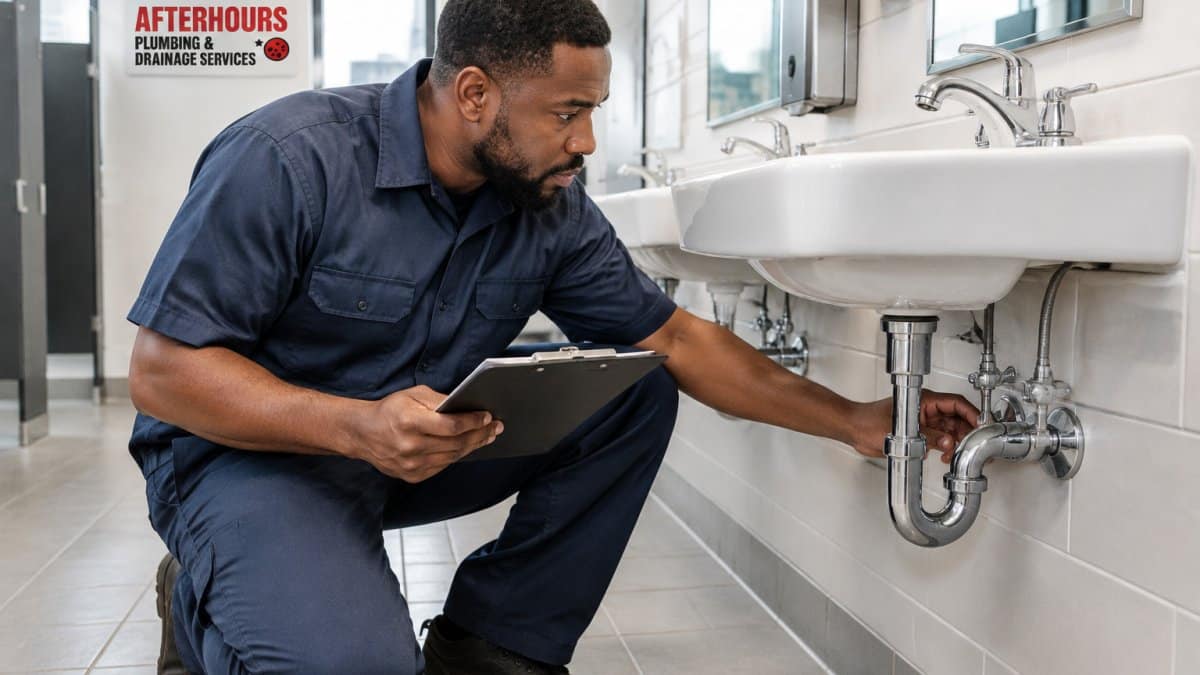
- Restrooms: Check toilets for running water, sinks for slow drains, and faucets for drips.
- Kitchens and break rooms: Look under sinks for moisture, and check the dishwasher connection.
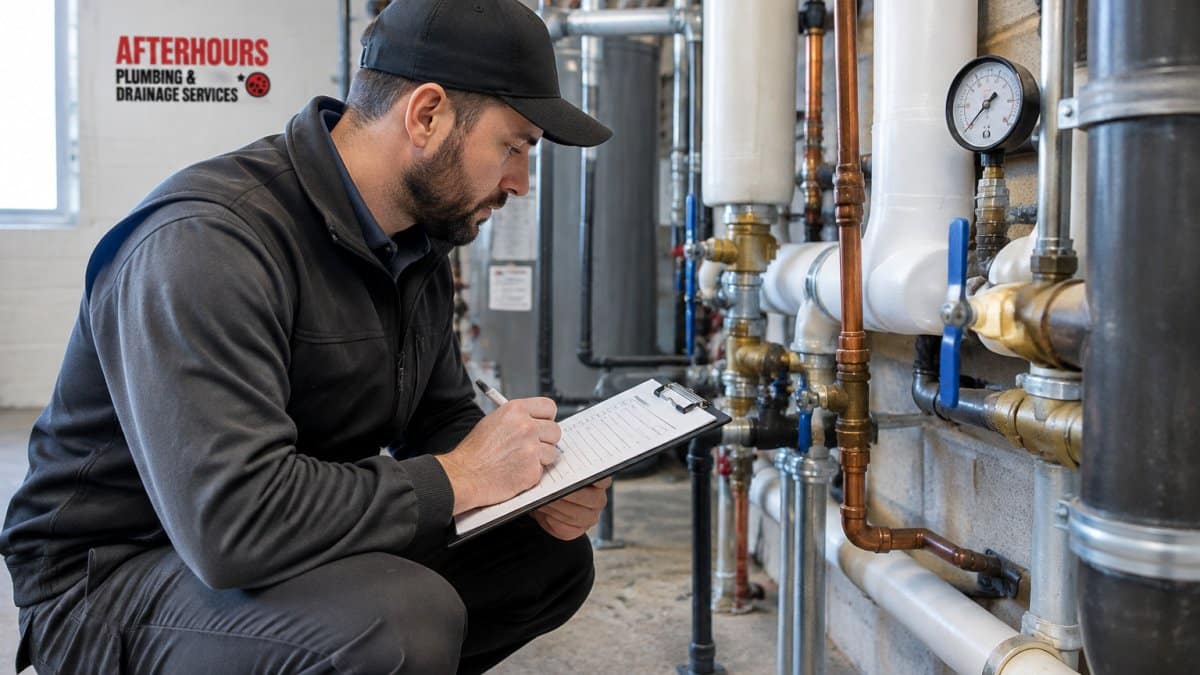
- Mechanical rooms: Inspect the water heater, shutoff valves and visible pipe joints.
- Exterior areas: Check outdoor spigots and drain openings for cracks or standing water.
Keep a simple log with the room, date and one line per finding.
Here is a quick reference for where to look in each part of the building.
| Area | What to check | Note |
|---|---|---|
| Restrooms | Toilets for running water, sinks for slow drains, faucets for drips | Check every visit |
| Kitchens and break rooms | Moisture under sinks, dishwasher connection | Look for moisture |
| Mechanical rooms | Water heater, shutoff valves, visible pipe joints | Inspect the water heater |
| Exterior areas | Outdoor spigots, drain openings | Look for cracks or standing water |
Common Plumbing Inspection Issues We Find in Commercial Buildings
Many commercial plumbing problems start small. Common issues include:
- Slow drains from grease or hair buildup
- Small leaks at pipe joints and under sinks
- Corroded shutoff valves that are hard to turn
- Water heaters with rust or drips at the base
- Running toilets that waste water
Watch for water stains on ceilings and walls. These often point to a leak above or behind the surface.
If you see active leaks, sewage odors or low water pressure across the building, call a licensed plumber. Our leak detection and repair team can help locate hidden leaks, and our commercial plumbing services cover ongoing care for businesses.
Building a Commercial Plumbing Maintenance Schedule and Documenting Results
Inspection timing can be adjusted to a building’s age and use.
Note the date, room, what you checked and any repairs made. Records help you spot patterns over time.
For help setting up ongoing care, see our plumbing services in Denver. You can also contact After Hours Plumbing & Drainage Services to discuss your property’s needs or request an estimate. Call us at 720-687-0052.
Frequently Asked Questions
How often should commercial plumbing systems be inspected?
Most commercial properties benefit from a licensed plumber’s inspection at least once a year, with more frequent checks for buildings with heavy use, older piping, or grease-producing kitchens. High-traffic restaurants, medical offices, and multi-tenant buildings often need more frequent attention to drains and water heaters. Your schedule should reflect how the building is used.
What should a plumbing inspection report include?
A useful plumbing inspection report lists each area checked, the condition of fixtures, pipes, valves, drains, and water heaters, and any leaks, corrosion, or pressure concerns found. It should note the date, the inspector’s name, and a priority rating for each issue where possible. Recommended repairs should be separated from routine maintenance so you can plan budgets and schedule work.
When should a property manager call a licensed plumber?
Call a licensed plumber right away for active leaks, sewer backups, no hot water, low water pressure across the building, or any gas-related smell. Inspection findings such as corroded supply lines, failing shutoff valves, or recurring clogs also warrant professional repair. Homeowners and managers can safely check for visible drips, slow drains, and running toilets, but anything involving water heaters, gas lines, or backflow prevention should be handled by a professional. We offer 24/7 emergency plumbing services for the Denver area.
