
How to Find a Trustworthy My Denver Plumber
Last Updated: November 10, 2026
Quick Summary
To find a trustworthy Denver plumber, verify the license number and the name on it, request a certificate of insurance, and get a written estimate and warranty before work starts. Compare at least two quotes when the job allows. Ask how the company handles after-hours calls and whether it pulls the required permits.
- Confirm the license number through the issuing authority for the jurisdiction where work happens.
- Ask for a current certificate of insurance that names the company you are hiring.
- Get the estimate, warranty, and permit details in writing before any work begins.
- Ask for extra work to be approved before it starts, not after it is done.
- Save the estimate, invoice, work order, and permit number together for future reference.
Table of Contents
- What Homeowners Usually Want to Know Before Calling a Denver Plumber
- How to Check Licensing, Insurance, and Warranty Details
- Understanding Pricing, Estimates, and Surprise Fees
- Finding a Reliable Emergency Plumber Denver Homeowners Can Count On
- Choosing Residential Plumbers Denver Homeowners Can Trust
- Booking Your Next Plumbing Visit With After Hours Plumbing & Drainage Services
- Frequently Asked Questions
What Homeowners Usually Want to Know Before Calling a Denver Plumber
Finding a plumber you can trust in Denver starts with knowing what to check before the phone rings. Homeowners in Denver, Aurora, and nearby communities often search for a my Denver plumber when a problem is already underway, which is exactly when it is easiest to make a rushed choice.
Most homeowners want straight answers to a few questions: Will the plumber show up when promised? Will the price be explained before any work starts? Are the technicians licensed and insured?
One common mistake is calling the first company that appears in search results without comparing anything. If your problem is urgent, our Emergency Plumbing Services Denver team can help you get a clear picture of what you are dealing with.
How to Check Licensing, Insurance, and Warranty Details
Most homeowners ask whether a plumber is licensed and insured, but few know how to confirm it. That gap is where bad hires happen. Here is how to verify each item yourself before anyone touches a pipe.
Licensing
Plumbing work is regulated at the state and local level, so the license that matters is the one issued for the jurisdiction where the work will happen. Ask the company for the license number and the name on it, then confirm it through the issuing authority. If a dispatcher cannot tell you which license covers the technicians being sent, that is a real warning sign.
Insurance
General liability insurance covers damage to your home if a repair goes wrong, such as a supply line that bursts during a valve replacement. Ask for a certificate of insurance and check that the policy is current and names the company you are hiring. Workers’ compensation coverage matters too, because it protects you from liability if a technician is injured on your property. A company that cannot produce a certificate is asking you to carry its risk.
Permits
Many plumbing jobs require a permit, including water heater replacements, sewer line work, and major remodels. Permits trigger an inspection, and that inspection is your proof the work meets code. Ask who pulls the permit and whether the inspection is included.
Warranty
Get the warranty in writing before work starts. A clear warranty states what is covered (labor, parts, or both), how long coverage lasts, and what voids it. Ask specifically whether the warranty covers a callback on the same problem and whether it transfers if you sell the house. If a company describes its warranty only verbally, treat that as incomplete.
Keep Your Paper Trail
Save the estimate, invoice, work order, permit number, and warranty document together. If a problem returns, those records show exactly what was done, when, and by whom. They also make it much easier to hold a company to its warranty.
Watch out: a low bid that comes with no license number, no insurance certificate, and no permit is not a bargain. It shifts the risk of a failed repair, a code violation, or an injury onto you.
Understanding Pricing, Estimates, and Surprise Fees
Plumbing costs vary widely depending on the problem, the parts involved, and how difficult the access is.
A good estimate should list the labor, parts, any trip or diagnostic fees, and what is included. Ask whether the diagnostic visit is applied toward the repair if you approve the work.
Be cautious of companies that quote a low price over the phone and then add charges once they arrive. Visit our Get a Free Estimate page to request a no-obligation estimate with upfront pricing.
Before you approve any work, compare what each estimate should include so you can spot gaps quickly.
| Estimate item | What to look for | Why it matters |
|---|---|---|
| Labor | Listed separately | Shows what you pay for time |
| Parts | Itemized | Confirms exact materials used |
| Trip or diagnostic fee | Stated upfront | Avoids surprise charges |
| Diagnostic credit | Applied to repair if approved | Reduces your total cost |
| Extra work | Approval needed before starting | Prevents unexpected bills |
| Written estimate | Requested before work starts | Gives you a basis to compare |
Finding a Reliable Emergency Plumber Denver Homeowners Can Count On
Emergencies such as burst pipes, major leaks, overflowing toilets, and sewer backups do not wait for business hours.
Ask how many technicians are on call and whether the company can handle multiple requests at once, especially if you manage several properties. Ask how it prioritizes emergencies and how it communicates arrival estimates.
If water is actively flowing, shut off the main water supply to limit damage while you wait. For urgent help, you can reach our emergency plumber Denver team directly. Leak detection is also available through our Leak Detection & Repair Denver service.
Choosing Residential Plumbers Denver Homeowners Can Trust
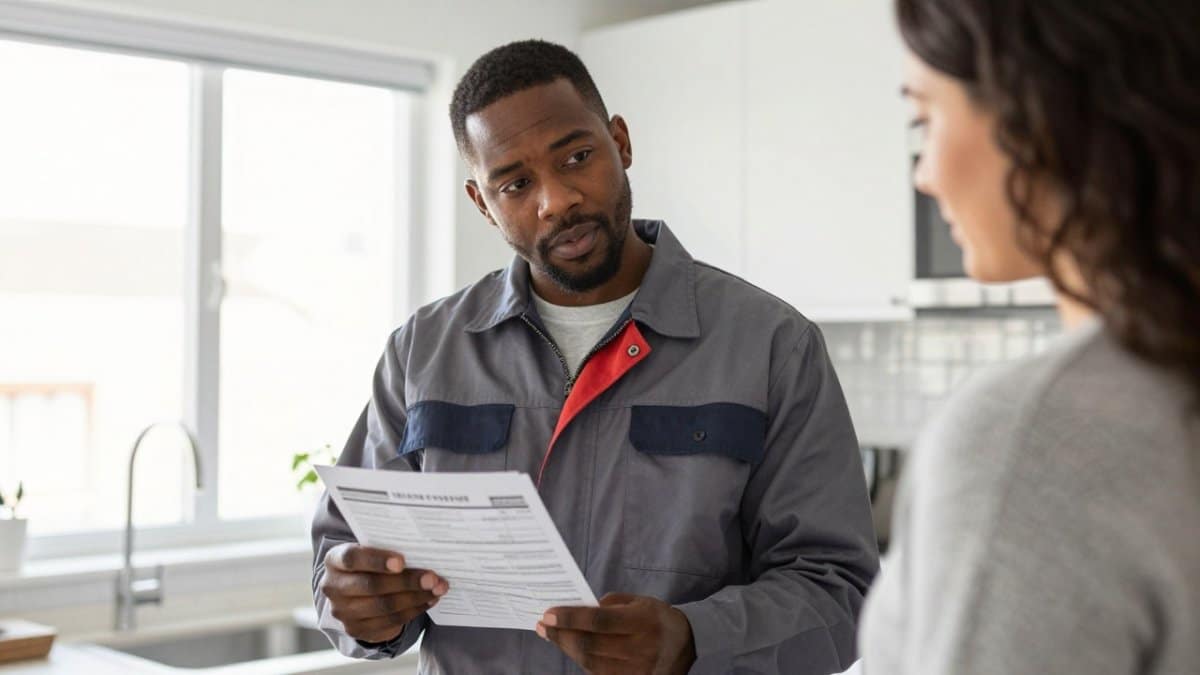
Trust comes from specifics, not from a friendly phone voice. A reliable residential plumber should explain the problem in plain language, show you the affected area, and let you decide on the repair. The harder question is often whether to repair at all. Here is a practical framework for both.
Questions That Reveal Real Expertise
Ask what is causing the problem, not just what it costs to fix. A technician who can explain the mechanism, such as a failing pressure-reducing valve causing high pressure that stresses supply lines, is diagnosing rather than guessing. Ask what happens if you wait, and ask what the repair does and does not solve. Vague answers are a warning sign.
Repair or Replace: A Practical Framework
For water heaters, the decision usually turns on age, warranty status, and how often it has failed. A unit near the end of its expected service life that needs a second major repair is often a candidate for replacement, while a newer unit with a single failed component is usually worth repairing.
For drains and sewer lines, the deciding factor is the condition of the pipe itself. A single clog is a cleaning job. Repeated backups in the same line, especially in an older home, suggest a bellied line, root intrusion, or deteriorated pipe that cleaning will not fix. For clogs that keep coming back, our Drain Cleaning & Clogged Drains services can help you find the cause.
Reading Reviews for Signal
Read reviews for detail rather than star ratings alone. Look for comments about punctuality, clear pricing, and cleanup. Be wary of a long run of identical five-star reviews posted within a short period. A smaller number of specific, varied reviews is usually more informative than a large block of generic praise.
Red Flags When Comparing Providers
- A price quoted firmly over the phone before anyone has seen the problem
- Pressure to approve work before you have seen the affected area
- No written estimate, warranty, or license number
- A technician who will not explain why a repair is needed
Use how to find a perfect plumber in Denver as a guide for checking licensing, reviews, response times, and the questions that reveal real expertise. A plumber who welcomes those questions is usually one worth hiring.
Booking Your Next Plumbing Visit With After Hours Plumbing & Drainage Services
When you are ready to book, have a few details ready: the type of problem, when it started, whether water is currently leaking, and the address. Clear information helps the office route the right technician and gives you a more accurate picture of next steps.
If the issue is smaller, you might first try a few simple steps yourself, such as checking for a clogged drain. Our guide to 5 drain cleaning steps before you call a plumber explains what is safe to try and when to stop.
To schedule service or ask questions, contact After Hours Plumbing & Drainage Services or call 720-687-0052. Visit https://afterhoursplumbingco.com for more information about our plumbing services in Denver and Aurora.
Frequently Asked Questions
How do I compare Denver plumbers before hiring one?
Start by checking that the plumber is licensed and insured, and ask for proof of both. Compare written estimates that list labor and parts separately, not just a single number. Ask how quickly they can respond to after-hours calls and whether they handle the type of work you need, such as drain cleaning, water heater repair, or sewer work. Read recent reviews on several platforms, looking for patterns in communication and workmanship rather than only star ratings. A reliable company will answer these questions clearly on the first call.
What should I check before hiring a residential plumber?
Confirm the plumber’s license and insurance, and ask whether the work will be performed by a licensed technician or an apprentice. Ask about warranties on both parts and labor, and get them in writing. Request an estimate before work begins and confirm what happens if the job uncovers additional problems. Ask for references or recent local reviews. Clear answers to these questions help you avoid surprise charges and unqualified workers.
How can I find an emergency plumber in Denver?
Search for plumbers who clearly advertise after-hours or 24/7 emergency service, then call and ask how the company handles nights and weekends. Find out whether a live person answers the phone and how the company prioritizes calls. Confirm the service area covers your address, since some companies limit emergency coverage to certain neighborhoods. Keep the company’s phone number handy before an emergency happens. Shut off your main water valve if a pipe bursts while you wait for help.
What questions should I ask a plumber before scheduling service?
Ask whether the company is licensed and insured, and whether its technicians are licensed. Ask how the price is determined and whether there is a trip or diagnostic charge. Ask how long the work typically takes, what the warranty covers, and whether they will provide a written estimate before starting. Ask about availability for your situation, including emergency or after-hours options. A straightforward plumber will explain these details without hesitation.
