
How to Estimate Burst Pipe Repair Cost and Timeline
Last Updated: November 8, 2026
Quick Summary
A burst pipe repair cost depends on where the break is, what the pipe is made of, and how much water damage has occurred. Most homeowners need a plumber to see the leak before getting a firm number. The bill often splits into two parts: the plumbing repair and the restoration of water-damaged materials.
- Shut off the main water supply first if you have an active leak.
- Access work like cutting drywall is often the largest line on the estimate.
- Plumbing repair and water-damage restoration are usually two separate invoices.
- Ask whether drying, demolition, and rebuild are included in each quote.
- Compare quotes by scope in writing, not just by the total price.
Table of Contents
- What a Burst Pipe Repair Usually Costs
- Burst Pipe Repair Cost in a Wall
- Underground Water Pipe Repair Cost
- How Long a Burst Pipe Repair Takes and How Leaks Are Found
- Frequently Asked Questions
What a Burst Pipe Repair Usually Costs
A burst pipe repair cost depends on where the break is, what the pipe is made of, and how much water damage has already occurred. Most homeowners won’t get a single flat number until a plumber sees the leak.
A burst pipe bill is really two bills: one to stop the leak and restore the pipe, another for everything the water touched, drywall, flooring, insulation, cabinets, sometimes mold treatment. Ask which parts an estimate covers.
Here is how the plumbing side of a burst pipe repair typically breaks down:
- Diagnosis and leak location: Pressure testing, acoustic listening, or metering to find the break before opening a wall or digging.
- Access work: Cutting drywall, removing flooring, or excavating, often the largest line on the estimate.
- Materials: Replacement pipe, fittings, solder or crimp rings, and any valves that fail during the repair.
- Labor: The time and skill needed to complete the repair.
- Permits and inspection: Often required for main-line and underground work.
- Patch and finish: Closing the wall, drywall, texture, and paint, sometimes included, sometimes quoted separately.
Several factors affect the scope of the work:
-
Pipe location: A pipe reachable under a sink costs far less than one buried in a wall or under a slab.
-
Pipe material: Copper, PVC, and PEX each have different repair methods and parts costs.
-
Water damage: Drying floors and drywall is a separate expense from the plumbing repair.
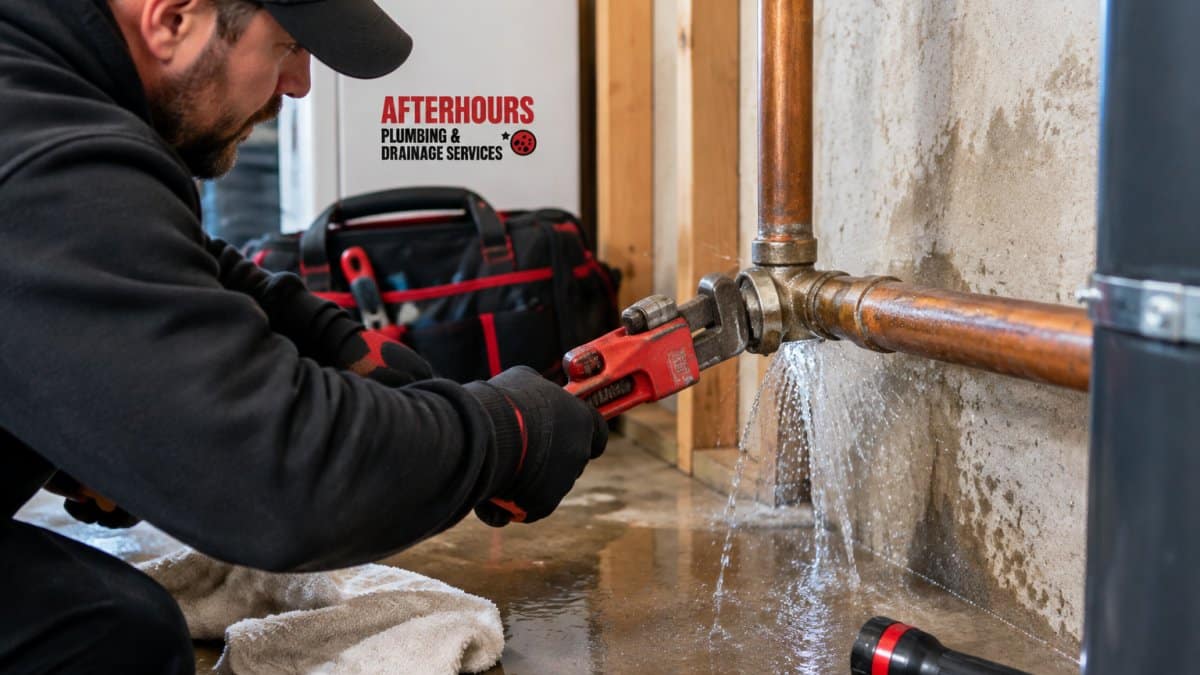
If you have an active leak, shut off the main water supply first. Our guide on what to do when a pipe bursts walks through the immediate steps to limit damage while you wait for help. For urgent situations, our Emergency Plumbing Services Denver team provides after-hours emergency service.
Plumbing Repair vs. Water-Damage Restoration
These are two different trades and usually two different invoices. Plumbing repair covers finding the break, cutting out the failed section, and restoring pressure. Restoration covers drying the structure, removing saturated materials, treating for mold if it has started, and rebuilding what was removed.
Homeowners often find that drying and rebuild work involves a separate scope from the plumbing repair. Ask whether the quote includes drying equipment, demolition, and rebuild; if not, request a separate restoration estimate.
Watch out: a plumber who quotes a repair without asking about water damage or inspecting surrounding materials is giving an incomplete estimate. Water sitting in a wall or under a floor for more than a day or two changes the scope significantly.
How to Compare Burst Pipe Repair Quotes
Comparing scope is more useful than comparing totals alone. Two quotes can differ mainly in what they include. Use this checklist when you compare estimates:
-
Scope in writing: Which pipe section is replaced, and how much wall, floor, or yard is opened?
-
Access and finish: Is drywall patching and painting included, or on you?
-
Materials specified: Copper, PEX, or PVC, and is the brand or grade named?
-
Permits: Who pulls the permit, and is the inspection fee included?
-
Warranty: What is covered on labor and materials, and for how long?
-
Restoration: Are drying, demolition, mold treatment, and rebuild included or quoted separately?
Ask each plumber to walk you through the line items, not just the total. A company that explains its scope clearly is usually the safer choice, even if the number is not the lowest.
The plumbing side of a burst pipe repair typically breaks down into these line items:
| Line item | What it covers | Note |
|---|---|---|
| Diagnosis and leak location | Pressure testing, acoustic listening, or metering | Found before opening a wall or digging |
| Access work | Cutting drywall, removing flooring, or excavating | Often the largest line on the estimate |
| Materials | Replacement pipe, fittings, solder or crimp rings, valves | Parts vary by pipe material |
| Labor | Time and skill to complete the repair | Depends on scope |
| Permits and inspection | Main-line and underground work | Often required |
| Patch and finish | Drywall, texture, and paint | Sometimes included, sometimes quoted separately |
Burst Pipe Repair Cost in a Wall
Repairs inside a wall involve more steps than exposed repairs because the plumber must open the drywall, make the fix, then patch and finish, each step adding labor and materials, often across two trades.
A burst pipe repair in a wall cost often comes down to how much drywall must come out.
Here is what typically drives the number in a wall repair:
- Access size: A plumber may open a small inspection hole first, then widen it once the break is confirmed. The wider the opening, the more patching and painting later.
- Pipe material and fittings: Copper uses soldering or press fittings; PEX uses crimp or expansion fittings; PVC is glued. Each has a different parts and labor profile.
- What is behind the wall: Insulation, vapor barrier, electrical, and blocking all affect how the repair is made and the wall closed back up.
- Finish work: Drywall patching, texture matching, and paint are frequently quoted separately. Ask whether the estimate includes them.
- Cabinet or fixture removal: A pipe behind a vanity, dishwasher, or built-in may require removing and reinstalling that fixture.
Watch out: a quote that says “repair burst pipe in wall” without stating how much wall will be opened and whether patching is included is not a complete estimate. Get the scope in writing before work starts.
If the wall is already wet, coordinate the repair and the drying. Opening the wall sooner lets the cavity dry and shows whether mold has started. For a leak that is actively damaging a wall, our Leak Detection & Repair Denver service can pinpoint the break before any wall is opened.
Underground Water Pipe Repair Cost
Underground leaks often involve the most work because they can require digging. A leak in a main water line can involve excavation, pipe replacement, backfilling, and surface restoration.
Before any digging starts, confirm the leak location. Learn the warning signs, methods, and process for underground line repairs so you know what to expect. A high water bill with no visible water can point to an underground problem. Our guide on finding hidden causes of high water use explains how to confirm a suspected leak before paying for excavation. Our EPA WaterSense guidance on finding household leaks explains simple ways to check for hidden leaks at home.
How Long a Burst Pipe Repair Takes and How Leaks Are Found
A simple repair on an exposed pipe may take a few hours. A repair requiring opening walls or digging can take a day or more, and drying the affected area can add more time.
Leaks are often found by pressure testing the line, using acoustic listening equipment, or checking the water meter with the house shut off. Our professional leak detection and repair services can pinpoint the break before any wall or yard is opened. If you need immediate help, call our after-hours team for emergency plumbing service in Denver.
When in doubt, contact a licensed plumber rather than trying to repair a pressurized line yourself. Call After Hours Plumbing & Drainage Services at 720-687-0052, or visit afterhoursplumbingco.com to request an estimate.
Frequently Asked Questions
Is it expensive to fix a burst pipe?
It depends on where the pipe is and how much damage the water caused. A pipe in an open crawl space or under a sink is usually a simpler repair than one hidden inside a wall or buried under a slab. Costs also rise when the leak has soaked flooring, drywall, or insulation, because drying and rebuilding are separate expenses. Ask for an itemized estimate that lists the plumbing repair, access work, and any restoration so you can see what drives the total.
How much does a plumber charge to fix a burst pipe?
The scope of a burst pipe repair depends on pipe material, pipe location, and how much cutting and patching is needed. Request a written estimate before work begins so the scope and price are clear.
Can a burst pipe be fixed in a day?
Many burst pipes in accessible locations, such as a supply line under a sink or an exposed section in a basement, can be repaired in a few hours once the plumber reaches the leak. Pipes hidden in walls, slabs, or underground often take longer because the plumber must locate the break and open access before repairing it. Drying and restoration can add days after the plumbing work is finished. Your plumber can give you a realistic timeline after inspecting the leak.
